OpenAI co-founder and president Greg Brockman said at WSJ Tech that AI could deliver significant advances in biology, healthcare and disease treatment within 12 to 18 months. He also raised the possibility that death could eventually become a choice, but the supplied reports present that idea as speculative and provide no evidence of a deployed capability.
What problem it solves
Coding agents need both exact design values and the rationale for applying them consistently. Without a structured, persistent representation of a design system, agents may miss design context or interpret visual guidance inconsistently.
Key features
Structured tokens and design rationale — The format combines machine-readable design tokens with human-readable Markdown ratio…
What problem it solves
Technical teams need CRM structures that can accommodate complex business needs and change as those needs evolve. They also need a way to extend CRM objects, views, workflows, and agents through code while supporting cloud, self-hosted, and local development workflows.
Key features
Code-defined CRM extensions — Developers can define objects, fields, and views as code, then p…
What problem it solves
Organizations need to move and continuously replicate data from transactional databases, event streams, and object storage into open lakehouse formats without depending on proprietary ingestion stacks. OLake Go addresses this with replication workflows, CDC, schema handling, and deployment options that avoid separate Spark, Flink, Kafka, or Debezium infrastructure.
Key featu…
What problem it solves
Readers need a structured way to understand AI Agent design principles and apply them through engineering practice. The book addresses this by organizing the material into 10 chapters and pairing the text with 109 companion experiments covering topics such as context engineering, memory, tools, evaluation, post-training, continuous evolution, and multi-agent collaboration.
K…
What problem it solves
AI agents may exceed their role, take unauthorized actions, or fail to follow organizational goals and policies. Teams need a way to test whether an agent behaves as intended across realistic and adversarial requests.
Key features
Business-aware simulations — Describe an agent, build a simulation environment for it, and exercise the agent with realistic requests that may exc…
What problem it solves
The project brings market monitoring, watchlists, portfolio records, research, news, backtesting, and report management into one workbench across China A-shares, US stocks, and HK stocks. It also keeps research records and imported materials on the user's computer while allowing research to be conducted with local AI subscriptions or compatible model APIs.
Key features
Unifi…
What problem it solves
Managing Kubernetes infrastructure across multiple clusters and clouds requires consistent configuration, deployment, operation, and observability. Teams also need collaborative workflows, policy enforcement, and performance characterization without relying solely on hand-written YAML.
Key features
Infrastructure lifecycle management — Manage the configuration, deployment, a…
What problem it solves
Building an MCP application involves repetitive protocol work beyond the core tool or application logic. Developers need schemas, validation, documentation, transport negotiation, authentication, and protocol lifecycle handling to follow MCP practices.
Key features
Python-native MCP servers — Turn ordinary Python functions into MCP-compliant tools, resources, and prompts. Fu…
What problem it solves
Personal and team knowledge is distributed across notes, conversations, trackers, and research, making it difficult to capture, organize, verify, and synthesize useful information. COG provides a markdown-based workflow in which agents can maintain a shared knowledge base, support recurring research and operational tasks, and verify selected work through independent checks.
…
What problem it solves
AI and machine learning workflows require vector search, fast random access, multimodal data storage, data evolution, and hybrid search combining vectors, full-text, and SQL predicates. Lance brings these capabilities directly into the lakehouse format.
Key features
Expressive hybrid search — Combine vector similarity search, full-text search with BM25, and SQL analytics on …
What problem it solves
Users need a unified place to work with different AI models, agents, documents, knowledge, and productivity tools. Without such a workspace, these activities require coordinating separate applications and provider-specific workflows.
Key features
Agents and automation — Create agents with instructions, workspaces, models, and tool permissions. Agents can handle files, comman…
What problem it solves
People need a way to delegate research, writing, code review, recurring tasks and work across connected tools to AI agents without giving up control over actions and data. They also need a foundation for embedding agent loops, tool calls, approvals, streaming and durable sessions into their own applications.
Key features
Everyday AI coworker — The desktop app supports resear…
What problem it solves
Modern systems need controlled access to database credentials, API keys, and other secrets across platform-specific infrastructure. Teams also need secure storage, key rotation, encryption, revocation, and detailed audit logs without building a custom solution.
Key features
Secure secret storage — Vault stores arbitrary key/value pairs and encrypts data before writing it to …
What problem it solves
The project provides a structured workflow for market review, risk management, trade planning, journaling, and continuous improvement. It is designed for investors who use long-term investing, ETFs, and dividend stocks as their core, while using disciplined swing trading as a satellite strategy when market conditions are favorable.
Key features
Workflow manifests for routine…
What problem it solves
The hidden system instructions that shape AI product behavior are difficult to inspect and change across models, products, and versions. This repository makes collected prompts available in a structured, product-oriented archive for study and comparison.
Key features
Broad product coverage — The archive covers prompts from major AI providers and products, including Anthropic…
What problem it solves
Language and decision models can generate text and code, but applications need a structured way for agents to compose interactive interfaces without granting them arbitrary executable capabilities. A2UI addresses this by expressing user interfaces as validated data, allowing agents to stream UI to applications through native framework components.
Key features
Schema-controll…
What problem it solves
Image creation often requires switching between separate tools, manually translating visual ideas into parameters, and losing the context of an ongoing conversation. This project brings generation, editing, reference workflows, model comparison, and asset management into a DeepSeek Harness conversation and canvas.
Key features
Chat-Based Image Creation and Editing — Describe…
What problem it solves
Teams need a place to chat and work with AI agents without separating conversation tools from agent activity. Buzz combines community channels, direct messages, and locally running agents that answer within conversations.
Key features
Team conversations — Join communities and communicate through channels, direct messages, solo chats, and team chats.
Source: README
Local AI a…
What problem it solves
Developers and contributors need a JavaScript runtime environment with clear release channels, guidance for building from source, and procedures for verifying downloaded binaries. The project also needs an open governance model that supports collaboration while maintaining clear standards for participation.
Key features
Cross-platform JavaScript runtime — The project provide…
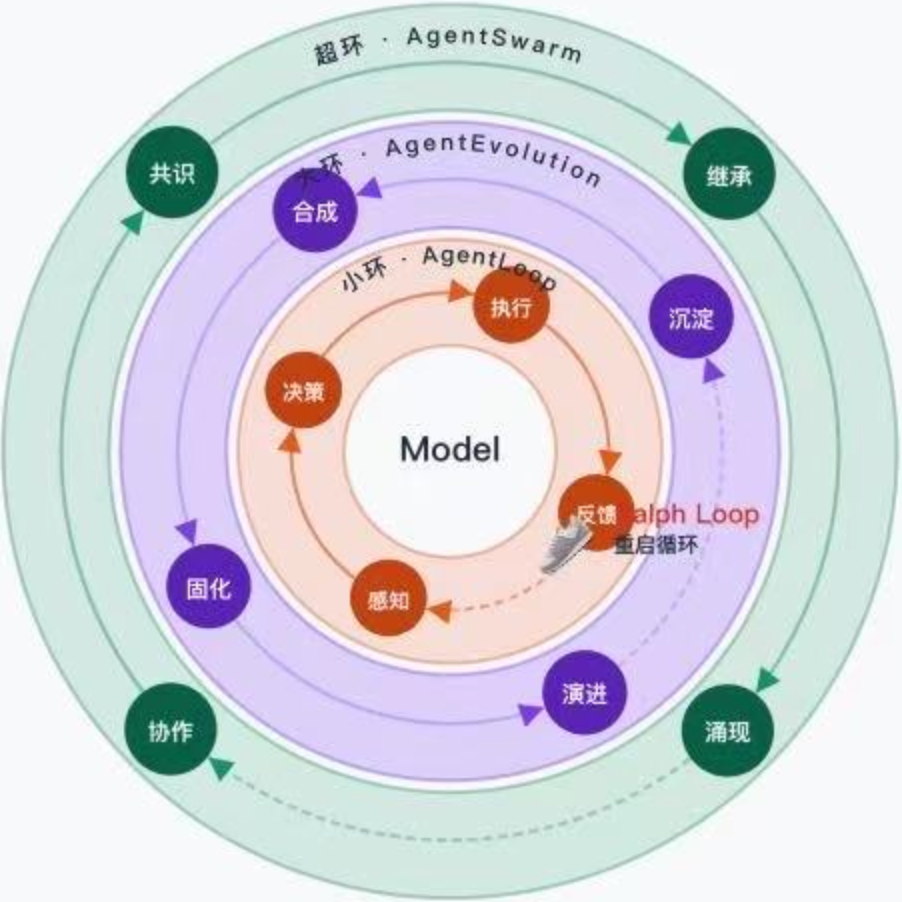
A coding agent can fix a program, yet the next time it encounters an error, it may still follow the same process of debugging, editing, and testing. The task outcome may have changed, but the method that produced it may not have. When the bottleneck lies precisely in that method, who is responsible for improving the program responsible for improvement?
Gödel Machine (GM) [1] framed this as a proo…
 design.md• Pinned