The Information reported that Anthropic told investors its engineers use Claude models for engineering and design work on the company’s custom chips, with Anthropic claiming substantial efficiency gains. Synopsys and Cadence Design Systems shares fell as much as 4% after the report, while TMTPost cited an industry practitioner who said current AI tools replace only some EDA functions and still require mature EDA tools.
What problem it solves
Technical teams need CRM structures that can accommodate complex business needs and change as those needs evolve. They also need a way to extend CRM objects, views, workflows, and agents through code while supporting cloud, self-hosted, and local development workflows.
Key features
Code-defined CRM extensions — Developers can define objects, fields, and views as code, then p…
What problem it solves
Serving large language models requires efficient memory management, flexible model execution, and practical integration with existing models and APIs. vLLM addresses these needs with inference and serving capabilities spanning batching, caching, quantization, distributed execution, and multiple hardware platforms.
Key features
Efficient memory and serving — vLLM manages atte…
What problem it solves
Applications often need to turn web pages and office documents into PDFs without managing Chromium, LibreOffice, or fonts. They may also need to modify, validate, secure, and deliver the resulting PDFs through a consistent HTTP API.
Key features
Multiple document conversions — Convert HTML, URLs, and Markdown with Headless Chromium. Convert office documents with LibreOffice …
What problem it solves
Long-horizon agents need a shared, durable world model that can be queried and updated continuously without becoming tightly coupled to the storage or execution layer. Omnigraph addresses this with typed graph data, multimodal retrieval, reviewable branches, declarative deployment configuration, and server-side policy enforcement.
Key features
Typed ontology — Define node an…
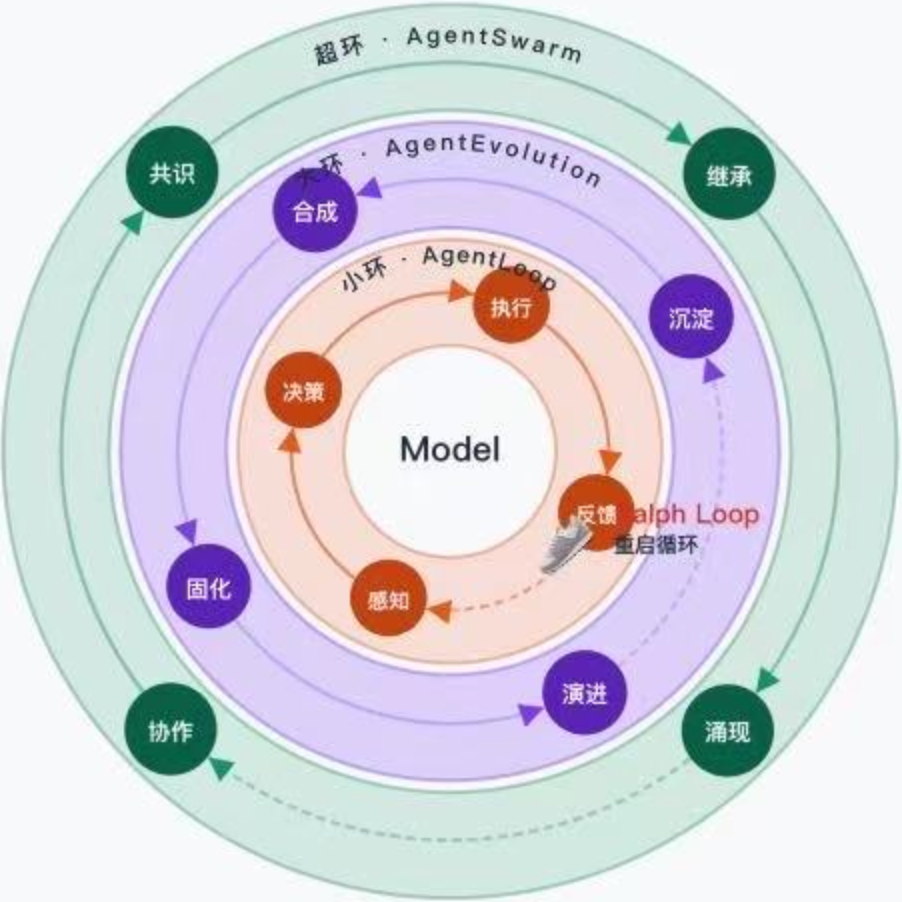
An Agent can complete a task once by relying on the context and reasoning available at that moment. To avoid relearning lessons on the next task, it needs to turn past experience into reusable knowledge. The challenge is that experience is never an isolated action: it also includes the original goal, environment, and why the action worked. Remembering only “how we did it last time” may save redund…
What problem it solves
Voice input and voice output are usually handled by separate cloud services, which means audio and transcripts leave the machine and the two halves of the voice loop do not connect. Voicebox aims to cover both directions locally: cloning voices from short samples, generating speech, dictating into any text field, and letting MCP-aware agents speak back in a cloned voice.
Key…
What problem it solves
Rust projects need a way to identify common mistakes, suspicious patterns, and opportunities to write more idiomatic code. Lint categories and configurable levels let teams adopt these checks according to their own coding and CI requirements.
Key features
Categorized lints — Lints are organized into categories covering correctness, suspicious code, style, complexity, perform…
What problem it solves
Applications need shared storage that can be mounted like a local POSIX file system while keeping bulk data in object storage and metadata in a separate database. This enables existing applications, Hadoop workloads, Kubernetes deployments, and S3 clients to use the same storage without changing application code.
Key features
POSIX-compatible file system interface — The clie…
What problem it solves
Teams need to capture, search, and analyze multiple observability signals without managing fragmented tools or complex infrastructure. OpenObserve addresses this with a unified platform, a single-binary deployment option, and familiar SQL and PromQL query languages.
Key features
Unified observability — Logs, metrics, traces, RUM, dashboards, alerts, incidents, pipelines, and…
AI has already entered code writing, algorithm optimization, and model development. But after a task is completed, what remains may be reusable capability—or merely an answer and scattered logs. The difference becomes apparent only when a similar problem comes up again: can the system reuse what it learned, or must it pay the cost of exploration all over again?
Recursive Self-Improvement (RSI) co…
 twenty• Pinned