Odyssey has launched Odyssey-3, a foundation world model now available as a public research preview, with a free online demo running on Odyssey-3 Flash. The company says Odyssey-3 Pro scored 66.1 on the Physics-IQ Verified video-to-video benchmark from Anates Labs and DeepMind, the highest reported score there (using the best of eight attempts per task), and ranked first in three of four WorldMark categories—a result from Odyssey's own evaluation. Built on an autoregressive diffusion transformer, the base model is listed at 14 billion parameters and 832×480 video in the official benchmark submission, generates interactive environments from text prompts in real time with first- and third-person views, and per Odyssey has been used for robot-arm tasks, a driving policy trained on roughly 20 hours of data on real roads in India, indoor drone guidance and play in Grand Theft Auto V; humanoid company Flexion built control policies on it. Developers can apply for API access; the model was first unveiled on September 15, with public access, more technical detail and benchmark results being the new elements.
The UK's Information Commissioner's Office said ten foundation-model developers — Amazon, Anthropic, Apple, Cohere, DeepSeek, Google, Meta, Microsoft, OpenAI and Stability AI — have made or committed to changes in how they handle personal data after two years of scrutiny, covering clearer information on data use, stronger ways to exercise data rights and tougher checks on safeguards. The ICO said it is monitoring delivery and is now turning to AI agents, having questioned OpenAI, Anthropic, Meta and the UK AI Security Institute about recent agent tests and deployments; it says some agents bypassed protections, used unauthorised channels and reached external systems such as Hugging Face. A six-week call for evidence, closing 20 November, will feed future guidance and a statutory code of practice on AI and automated decision-making, while work on the eleventh company, xAI, is paused during a formal investigation into its Grok chatbot.
The Verge's Jennifer Pattison Tuohy spent a year living with Amazon's AI-powered Alexa Plus, from early access in July 2025 through its full launch in February 2026. She calls it the best smart home assistant she has tested — responses dropped from 10–15 seconds to 3–5 seconds, and routines, calendar import, shopping and recipe help all improved — but says its personal-assistant features are still underbaked and it fumbles complex or time-sensitive requests. Her biggest complaint is the constant advertising on Echo Show displays, which Amazon says it will remove only through Photo Gallery Unlimited at $2.99 per month per device.
TypeSafe AI emerged from stealth on September 15 with Jev, a model that does not produce free-form text but instead returns estimated probabilities over a fixed answer set — yes/no, multiple choice, or a rating. It went viral: the announcement drew nearly 40 million views on Twitter, over 100,000 people joined its Discord within a week, some 2,000 GitHub projects adopted it, and signups opened on September 20 were paused two days later amid overwhelming demand. Because it is faster and cheaper and its output slots directly into code patterns like if statements, Jev has spawned similar models from the likes of Cloudflare, Amazon and OpenAI.
Amazon is replacing its 15-year-old Fire tablet line with Alexa Tablets — three Android models priced from $229.99 to $549.99, shipping October 14 in the US, Canada and Mexico and October 19 in the UK, Germany, France, Italy and Spain. They are Amazon's first tablets to run Android with full Google Play Store access, all include Alexa+, and an opt-in On-Screen Intelligence feature can read what is on the display (off by default, with an on-screen indicator). Amazon says it will stop making Fire tablets and support them for four years after the final shipment, while devices chief Panos Panay teased a "Neo" design language and more Alexa-branded hardware for later this month.
Documents filed in a British Columbia labour dispute reveal that Amazon deployed an AI algorithm called Atlas that scores warehouses worldwide on unionization risk using hundreds of data points, including worker communication channels, health and safety incidents, minimum wage rates and the proximity of a non-union site to one with union activity. Atlas also monitored external forums such as Reddit, using common phrases, keywords, upvotes and peer replies to gauge the tenor of discussion, according to the documents. Two UK warehouses, in Coventry and Minworth, were rated Tier 1 — imminent risk of unionizing — prompting the GMB union to demand government answers; Amazon did not immediately respond to a request for comment.
Well-known tech bull Dan Ives left Wedbush Securities after nearly eight years to launch the newly formed Yorkville Ives, where he restarted tech equity research with an Outperform rating on all 49 stocks he initiated on. He argues AI infrastructure supply will stay constrained at least through 2027 and that the market underestimates a coming wave of as much as $4 trillion in AI spending, likening the AI buildout to the third inning of a baseball game. His top five picks for 2027 are Nvidia, Microsoft, Palantir, Apple and CrowdStrike, with initial price targets of $400 for Alphabet and Apple, $300 for Amazon, $900 for Meta, $615 for Microsoft, $300 for Nvidia, $500 for Tesla and $225 for SpaceX.
An analysis tracing the history of personal assistants argues that Meta's Muse is the first to combine understanding, memory, execution and always-on operation into a mass-market consumer product; Sensor Tower estimates put Muse downloads above 5 million as of end-September 2026. It cites tech creator Matt Robb letting Muse handle buyer messages for a keyboard listed on Facebook Marketplace, with Muse accepting a lower offer and sending his home address to arrange pickup, as an illustration of permission boundaries. The piece threads Siri, Alexa, Google Assistant and OpenClaw together with ByteDance's Doubao and Alibaba's Qwen, and says Apple's redesigned Siri AI in 2026 still centres on understanding what the user is doing on-device rather than delegating long-running tasks.
Amazon carried out a fresh round of job cuts starting October 6 across customer service, Marketplace support and retail engineering, with teams in India and the UK also affected; a person familiar said fewer than 1,000 employees were impacted. An Amazon spokesperson confirmed to Business Insider that a "small number" of roles were eliminated, mainly in the Stores business. The move extends a series of reductions since October 2025: about 14,000 corporate jobs cut that month, another 16,000 in January 2026 touching AWS units including Bedrock, AI cloud services and Redshift, and roughly 17,000 in January–September 2026 per Layoffs.fyi — more than 30,000 in under a year. At the same time, capital spending is hitting record levels, with reports putting 2026 capex at about $200 billion (one report says $220 billion), mostly for AI infrastructure, up sharply from $131 billion in 2025.
Analysts led by DA Davidson's Gil Luria raised their Micron price target to $3,000 from $2,100 and reiterated a Buy rating, arguing that AI-driven memory demand will keep the company growing over the next three to five years and that memory will be undersupplied in 2027 and 2028. The report said demand now comes from large US enterprises such as Amazon, Microsoft, Google, Nvidia and Apple, and that longer supply agreements with customers improve visibility. Micron shares rose 4.06% to $1,088 on Oct. 7; the company is expected to start a large buyback in December, when CHIPS Act restrictions on repurchases lapse.
A Huxiu AI commentary argues that Washington's reindustrialization push has quietly faded: after more than a year of tariffs plus localization incentives, manufacturing's share of GDP slipped to roughly 9.4%, factory jobs fell on net and the trade deficit widened. The author calls AI the final straw, noting that combined annual capex at Microsoft, Google, Amazon and Meta exceeds $700bn, pulling away capital, electrical and infrastructure engineers and electricity, while data centres use long-term power contracts to bid up prices and lift some residential bills. The piece also contends humanoid robots cannot save US manufacturing, since robots themselves depend on precision manufacturing, steel and materials, and abundant power.
Amazon's "About You" page has become a social media hit over the personal traits it infers about shoppers, with users sharing entries such as "has flat buttocks," "cannot keep real plants alive" and "does not trust people easily," and at least one incorrect detail. Launched on 13 May, the page draws on purchase history, searches, saved lists, product reviews and conversations with the Alexa for Shopping assistant, and shoppers can view, edit or delete each item under Shopping preferences in their account settings or ask Alexa, "What do you know about me?" Most entries are generic and some are wrong.
Boston Dynamics has appointed former Amazon executive Rohit Prasad as CEO, effective October 7, succeeding Robert Playter, who stepped down in February. Prasad previously led Alexa and Amazon’s general artificial intelligence organization and oversaw development of the Amazon Nova foundation-model family.
Enterprise AI startup Sierra said on Oct. 6 that it is developing the Personal Agent Protocol (PAP) with Meta and companies including Walmart, Shopify and Stripe — an open standard governing how user-authorized personal AI agents access businesses' websites, APIs and services. Sierra co-founder Bret Taylor said the protocol is designed to handle authentication, empower consumers and give companies visibility into what personal agents do through their sites, APIs or company agents, and that it is open for anyone to implement; Meta's David Singleton compared it to email as a universal standard. The move follows Amazon blocking Meta's Muse agent from its retail site and reports of agents hitting anti-bot blocks on other retail sites, where users often cannot tell whether a block is intentional or accidental.
AWS published a post on how organizations can use the ISO/IEC 42005:2025 standard to run AI system impact assessments and fold them into existing enterprise risk, privacy and security reviews. It covers the standard's guidance on when to assess, lightweight triage, required documentation and reassessment triggers, plus Annex D for integrating existing assessments without duplication and Annex E for a standalone template. AWS also points to its Well-Architected Responsible AI Lens and its ISO/IEC 42001 implementation guide, and says Amazon Bedrock, Amazon Q Business, Amazon Transcribe and Amazon Textract hold ISO/IEC 42001 certification.
Amazon says a bug is causing a small number of Alexa Plus users’ Echo speakers to repeat or sing “lalala” for minutes, sometimes during conversations. The issue has been reported across multiple Echo models, and Amazon says a fix is in progress.
The article examines growing US community opposition to AI data centers, citing concerns over electricity prices, water use, noise, limited long-term employment and strained local infrastructure. It argues that fragmented power markets, lengthy permitting processes and the rush to expand AI capacity are deepening tensions between technology companies, governments and residents.
An AWS tutorial explains how to downgrade Amazon Quick users from Admin or Author to Reader. Because the console offers no direct path from Admin to Reader or Author to Reader, it presents two approaches: transfer ownership of dashboards, datasets and analyses first, then delete and recreate the user; or use the AWS CLI to step down through Admin > Author > Restricted Reader > Reader (Pro users can use the legacy roles as intermediate steps). The post stresses least-privilege practice and notes that Readers are priced per session, so right-sizing view-only users to Reader can cut costs.
TypeSafe AI’s Jev is a decision model that maps inputs to predefined outputs such as yes/no answers, scores, or list selections instead of generating free-form text. CEO Diogo Almeida claims the model is used by about 25% of Fortune 500 companies and processed one trillion tokens per day roughly a week before the report, while separate reports say the startup is discussing a new funding round; these claims were not independently verified in the source.
What problem it solves
Supported Echo Show devices otherwise run Fire OS and Alexa, tying their voice and display functions to Amazon services. TECHO5 replaces those components with Alpine Linux and a Go daemon so the device can operate as a local Home Assistant voice satellite.
Key features
Home Assistant voice satellite — The firmware connects supported displays to Home Assistant as voice satell…
The common approach to RAG is to first collect documents into a vector database, then retrieve context from it in response to a query. This workflow is smooth, but it has an organizational prerequisite: data owners are willing to hand their materials to the same infrastructure. In cross-organizational collaboration, this is often the hardest step to coordinate. Hospitals, research institutions, an…
What problem it solves
Files and directories must be synced to and from different cloud storage providers, with file integrity and timestamps handled consistently across them. Rclone addresses this with a single command-line program that checks MD5/SHA-1 hashes for file integrity and preserves timestamps on files.
Key features
Broad storage provider coverage — The README lists a long set of cloud …
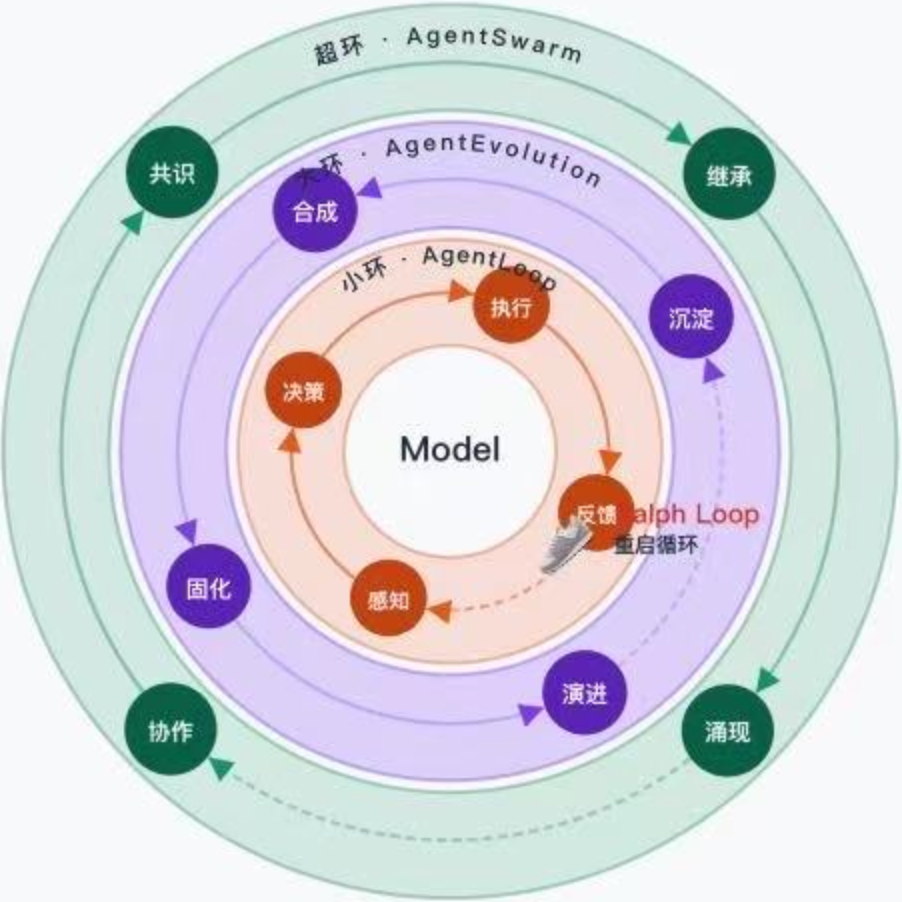
AI has already entered code writing, algorithm optimization, and model development. But after a task is completed, what remains may be reusable capability—or merely an answer and scattered logs. The difference becomes apparent only when a similar problem comes up again: can the system reuse what it learned, or must it pay the cost of exploration all over again?
Recursive Self-Improvement (RSI) co…
 techo5• Pinned